There are a variety of forms, materials and decoration used for gaming pieces. Several typologies have been developed in the past with the most relevant and recent one made by Skomsvoll (2012). This typology was created to enable the examination of games from the Scandinavian Iron Age and early medieval period in Northern Norway. Much of the previous typologies were combined to create a typo0logy which includes more recently found gaming piece types, and could be comparable with both previous and future studies.
There are, however, some gaming piece types which appear in the British Isles, which do not easily fit into Skomsvoll’s typology, and so my Masters research developed the typology further so that British gaming pieces could by classified by type and still be comparable with those from Skomsvoll’s study.

Type A
Conical (sometimes described as ‘onion shaped’ or ‘periform’)
(This type combines Skomsvoll’s Types A, B and C. To avoid confusion there will be no Type B or C listed here)
A1: Hemispherical with a pointed top
A2: A1 with an extended neck
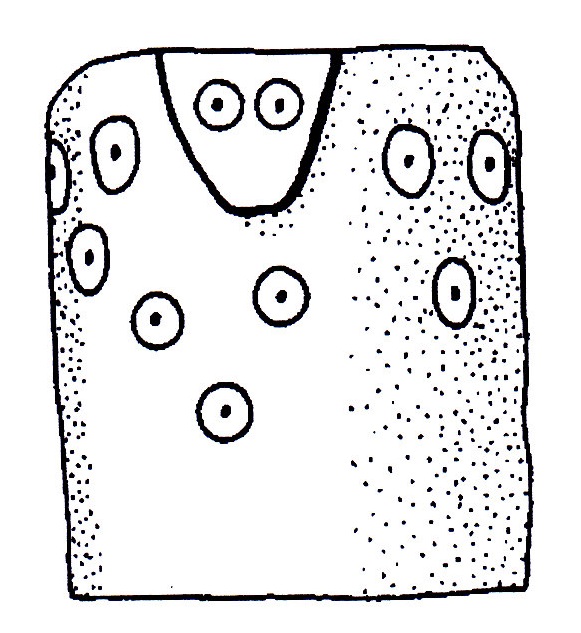
Type D
Abstract Arabic chessmen
Stylised
Associated pawns, similar to Type H2, are included here
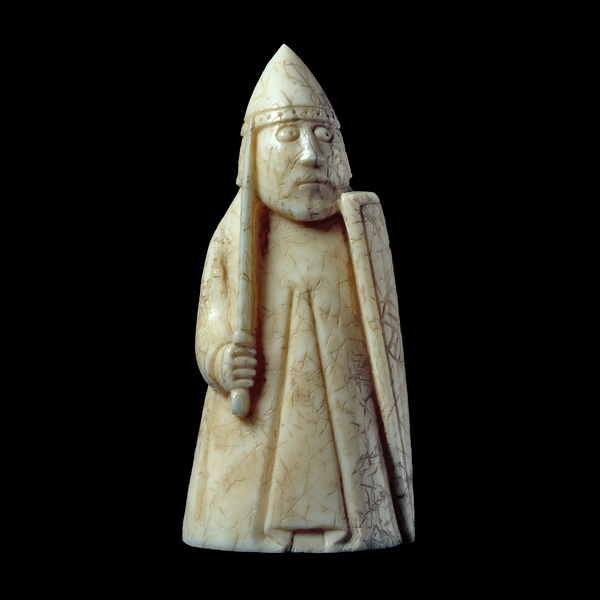
Type E
Figural
E1: Conical with fully realised facial features
E2: Figurative chessmen, in recognisable zoomorphic and anthropomorphic shapes, or with them carved on. Associated pawns included
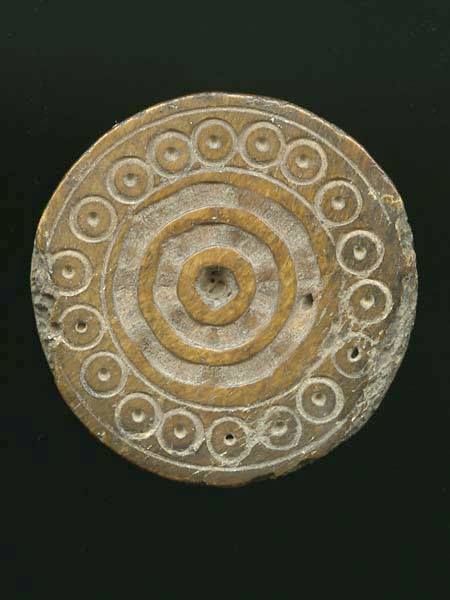
Type F
Cylindrical
F1: Plain counter with parallel sides
F2: Incised ring-and-dot and circle design counter with parallel sides
F3: Incised zoomorphic, floral or anthropomorphic design counter with parallel sides
F4: Taller than types F1-3, with parallel sides. Often hollow and made out of composite materials

Type G
Cuboid
G1: Square flat disc
G2: Taller cuboids
G3: Dice

Type H
Hemispherical (sometimes described as ‘plano-convex’ in previous studies)
H1: Flat base, convex (not pointed) top. No vertical walls
H2: Cylinder with parallel sides and a convex, not pointed top
H3: Same as H2 but made from horse teeth. Natural form, but usually polished
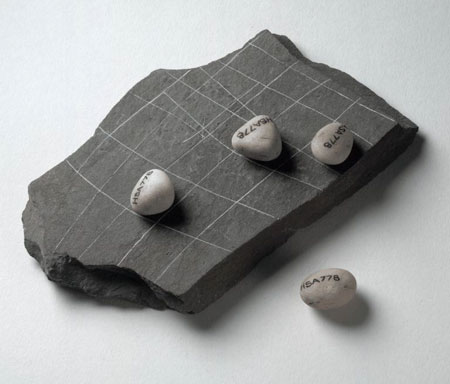
Type J
Items related to gaming
Animal bones, lead, stones. Often unworked or inscribed with runes.
Game boards
 Historic Gaming Pieces